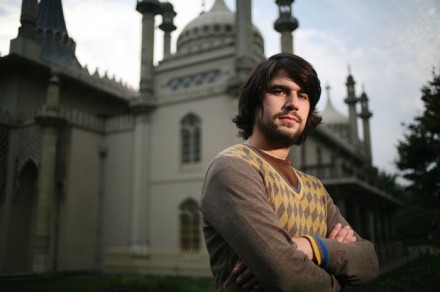
Will Holland represents a fascinating convergence of musical exploration and cultural curiosity. Based in Colombia, he creates as a DJ and producer under the moniker Quantic, releasing captivating Latin and African-influenced electronic works over the past decade. His approach involves carefully selecting the finest elements from diverse genres—hip hop, soul, roots reggae—and weaving them into original compositions and rhythms.
His musical journey has been marked by consistent excellence and critical acclaim since releasing his debut album, The 5th Exotic, in 2001. A restlessly creative artist, Holland has assembled an impressive catalog through multiple projects including Quantic Soul Orchestra, the Limp Twins, and Quantic Presenta Flowering Inferno. These collaborations with talented musicians explore a remarkably diverse range of musical styles, reflecting our contemporary post-modern soundscape. His work alongside artists like Alice Russell, Bonobo, and Alfredo Linares has produced some truly memorable musical ventures.
Holland operates somewhat under the radar—an enigmatic figure whose personality remains largely unknown to his audience. For years, I knew him only through his meticulously crafted tracks, exchanged among music enthusiast circles. The precision with which he extracts and arranges elements from different styles reveals someone deeply passionate about music with an extensive listening history. This passion proves infectious. During his September 2010 visit to Chicago as part of a North American tour, he graciously agreed to discuss the origins of his distinctive sound.
A Conversation with Will Holland
My name is William Holland. I was born in Worcestershire, England, and I've lived in Colombia for four years now. I traveled there originally to record with Alfredo Linares, a Peruvian pianist recommended by my friend Beto Gyemant, who was compiling the Panama Series for Soundway Records. We connected in Colombia, and I ended up spending more time there than back in England. Before that, I lived in Brighton.
Under the Quantic name, I've completed 13 albums. I started creating Quantic music when I was sixteen. Music runs through my family—my father played banjo, my mother played fiddle, and they both sang, along with my sister. Growing up in the UK, you're exposed to sounds from the islands, particularly Jamaican music. Sound system culture is huge there—drum and bass, trip hop, all of that. Latin music had less of a presence, though there were Chilean and Brazilian communities, just not as many Colombian, Cuban, or Puerto Rican folks compared to cities like New York or Chicago.
Colombia is where I happened to land, and there are many reasons why it's become so important to me. It's a truly special place. But I could just as easily have ended up in Luanda, Trinidad, Lagos, or New Orleans. Musically, I don't discriminate—listeners do that. I remain open to everything. I'm fascinated by music from Madagascar, Tennessee, and everywhere in between. What interests me is connecting it and relating it to other musical forms. Like tonight's performance—I played boogaloo that connects to the Chicago blues sound.
I have this VTech internet radio in my kitchen that picks up stations worldwide. I listen to Radio Nova in Paris, a roots reggae station in Jamaica, KCRW, and the BBC World Service. I also enjoy a lot of spoken radio—comedy and drama without music accompaniment.
When I'm listening purely for pleasure, I tend toward less rhythmic material, more like classical music. Not Western classical though—I'm really drawn to Indian, Thai, Balinese, and Indonesian choral music. The voices really captivate me.
Absolutely. I dig extensively throughout Colombia—Barranquilla, Cali, Medellín, Armenia. I search for records in all these Colombian cities. The way you evaluate a song for personal listening often differs from how you assess it for playing at events—dance music is its own category.
That said, tonight was special because I performed in a large space with wooden floors, which is really important in a dance club. Plus, people could choose to sit and just absorb the music rather than necessarily dancing. That creates a unique atmosphere.
Chicago has this significant house music history—that's both a blessing and a challenge. In some places, you can play house-tempo music and people really appreciate it because they connect to it. But there's also part of the crowd thinking, "I don't want to hear this—I can get it anywhere." So it works in your favor and sometimes creates problems.
The ideal audience is truly mixed—racially, culturally, and musically. Chicago has that mixture I love. Tonight drew all kinds of people across a wide age range.
What's important to understand is that whereas before people would show up with perhaps 40 records, I now have a laptop full of music that's far more diverse than any physical record box. I've digitized many records from my collection in Colombia.
We live in a world of constant change. Even releasing a track now, a song might exist and disappear within a month. It doesn't matter if a song was recorded thirty years ago or today—it's temporary regardless.
Comments
Great interview Brenda!