Narratives That Shape Communities
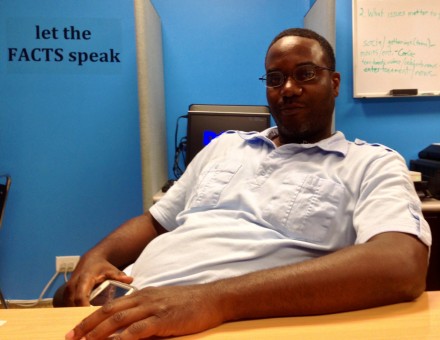
Years back, Frank Latin found himself drawn to the conversations happening all around him—at barbershops, on basketball courts, in neighborhood corners. Those talks weren't just idle chatter. They represented the pulse of his community, the stories that mattered to people living there.
It was the kind of news his neighbors truly cared about.
So he listened closely. He joined in.
Not long ago, Latin noticed something troubling. The narrative being told about his West Side community felt incomplete. What he heard in mainstream coverage focused almost exclusively on violence, poverty, and struggle—painting only the darkest picture of where he lived.
That's when he decided to take action. He threw himself into a mission: helping his neighbors access authentic information about their own community. Through dedication and hard work, he established the Westside Writing Project, a largely volunteer-driven initiative with ambitious goals.
Building the News the Community Needs
Latin launched with a volunteer-run newspaper called the Nitty Gritty News. But the project evolved into something much larger, involving Chicago Public Schools students from high schools and elementary schools, along with young people enrolled in Chicago Parks Department summer programs. College students who started with little journalism experience have returned to sharpen their craft and tell their community's authentic stories.
His commitment to elevating West Side narratives received a significant boost recently when the Chicago Youth Voices Network (CYVN)—an umbrella organization representing youth media groups citywide—invited the Westside Writing Project to join their coalition.
The transition into media training and community journalism still feels somewhat unexpected for Latin. "I'm an economics guy," he admits. His media expertise is "completely self-taught."
Learning Through Storytelling
Indeed, Latin arrived in Chicago from Muskegon, Michigan, and made the West Side his home over ten years ago. He earned both undergraduate and master's degrees in economics from Roosevelt University. At 45, he previously worked at the Illinois Department of Employment Security and currently serves at the U.S. Department of Labor's Chicago office—all while scrambling to sustain his passion project, the Westside Writing Project.
Financial support has been slow to materialize. Yet Latin remains hopeful.
He understands that with adequate resources, the stories his reporters tell can counter the bleak, heartbreaking portrayals the news media often presents about the West Side.
But his optimism isn't naive. Latin recognizes the profound challenges his community faces. He measures them by listening to parents of the youth who participate in his project. "I witness many people disconnected from the labor market," he explains. "Many are waiting for assistance, trying to survive however possible. And some have simply given up."
Yet he also hears different stories—narratives about a community of people thriving, dreaming, and doing their very best.
Stories about young people eager to learn. Community organizations working tirelessly to improve the neighborhood. Adults who visit the project's office, located at the Sankofa Cultural Arts and Business Center at 5820 W. Chicago Ave., to use computers for job searches and resume preparation.
A Space for Shared Stories
In a city where strangers too often pass each other without connection, storytelling can serve as the glue binding us together. It's how we discover what's happening and what truly matters. That's what captured Frank Latin's attention years ago. And that's what he's replicating now.
Do you have a story to share? Are you telling these stories?
Reach out and let's talk.